







Search Results for: Geographical Indication
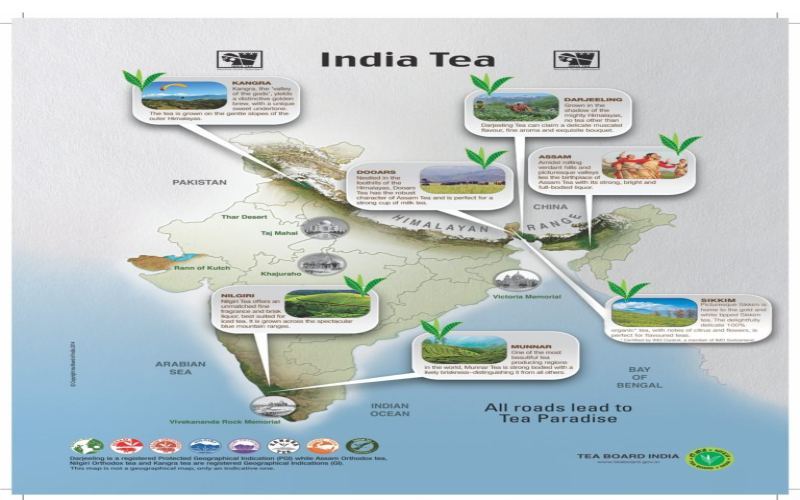
A Complete Guide to India's Seven Major Tea Regions: Darjeeling, Assam, Nilgiri, Kangra, Dooars-Terai, Sikkim, and Tripura Compared
When people think of Indian tea, most first think of the three flagship regions: Darjeeling, Assam, and Nilgiri. But in reality, India's tea landscape extends far beyond these. Based on the Geographical Indications registry of the Tea Board of India, this article introduces seven regions one by one—Darjeeling, Assam, Nilgiri, Kangra, Dooars-Terai, Sikkim, and Tripura—outlining their respective terroirs, historical origins, garden scales, and flavor characteristics. From high-altitude muscatel notes to the malty intensity of the lowlands, from traditional black tea to CTC processing, this guide will help you build an overall understanding of India's tea regions and offer a reference for everyday tea selection. Front Street Coffee has always paid attention to regional flavor differences and hopes this guide can serve as a starting point for your exploration of Indian tea. [more…]
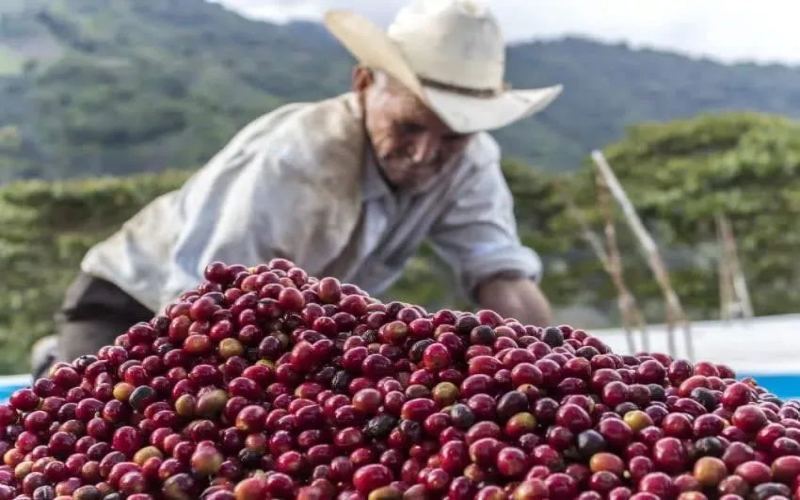
Honduran Coffee Bean Grading System, Flavor Characteristics, and the Stories Behind the Geographical Indications of Eight Major Producing Regions
Honduras, as an important coffee-producing country in Central America, has seen its coffee industry undergo a transformation from rudimentary processing to specialty-grade refinement. This article will guide you through Honduras's coffee bean grading standards, the distribution of its six major regions and eight sub-regions of western coffee, as well as the country's first government-protected geographical indication system. At the same time, we will also share Front Street Coffee's brewing recommendations for Honduras's Sweet Orange Estate, helping coffee enthusiasts better savor the unique flavors of this Central American origin. [more…]
A Comprehensive Guide to Colombia Supremo Coffee Grade and the Flavor Characteristics of the Medellín Region
Colombian coffee occupies an important place in the global specialty coffee landscape, and among them, Supremo, the country's highest-grade coffee bean, has always attracted the attention of coffee lovers. This article will explore Supremo's taste characteristics, grade classification, the terroir conditions of the Medellín producing region, and the flavor expression brought by washed processing, giving you a comprehensive understanding of this high-quality coffee with notes of sweet orange, nuts, and chocolate. It will also introduce the background of the geographical indication certification of the Colombian Coffee Growers Federation, as well as Front Street Coffee's reasons for recommending this bean, providing a reference for your purchase. [more…]
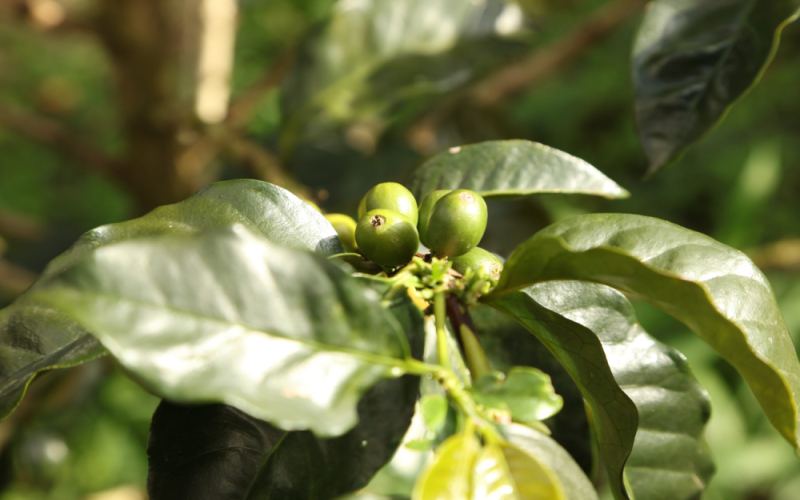
Colombian Coffee Flavor Analysis: From Rose Valley to Sakura, Exploring the Regional Characteristics of Strawberry-Flavored Coffee Beans
Colombian coffee is known for its balanced, smooth body and bright acidity, and on this land nourished by the Andes Mountains, different regions and processing methods give rise to distinctly characteristic flavors. This article takes you deeper into the geographical indication background of Colombian coffee and the distribution of its main producing regions, with a focus on analyzing the flavor characteristics and processing techniques of coffee beans such as Rose Valley, Huila, Flower Moon Night, and Cherry Blossom, while also sharing Front Street Coffee's brewing suggestions to help you find your ideal strawberry-flavored coffee beans. [more…]
A Complete Analysis of Honduran Coffee Regions: Flavor Profiles of Six Major Areas and Brewing Tips for Litchi Orchid
Honduran coffee has performed impressively on the international stage in recent years. Unlike traditional producing countries such as Brazil and Colombia, it is a rising star in Central America. This article systematically reviews six major Honduran coffee regions—Copán, Opalaca, Montecillos, Comayagua, El Paraíso, and Agalta—introducing each one's geographical conditions, altitude ranges, common varieties, and cup flavors. It also features Front Street Coffee's recommended Lychee Orchid from the Marcala region, describing its layered notes of lychee, brandy, cream, and chocolate, and explaining how medium roasting balances acidity, sweetness, and bitterness. [more…]

Shenzhen Yeshengshan's thousand-yuan olive juice sparks heated discussion, Heytea becomes largest shareholder after investing
In the cold winter, a cup of hot milk tea always brings a bit of warmth. Prices for drinks on the market range from under ten yuan at Mixue Bingcheng to thirty or forty yuan at Nayuki and Heytea, with most still within what consumers can afford. However, recently a thousand-yuan drink has drawn attention on Weibo's trending topics—an olive juice launched by the Shenzhen milk tea brand Yecuishan, priced as high as 1,000 yuan. This drink uses the rare Chaoshan variety Jinyu Sannian olive, with the raw material costing about 800 yuan per jin on the market, and production taking nearly 3 hours. At the same time, Heytea has taken a stake in Yecuishan, holding 60% to become the largest shareholder, and the brand currently has more than 30 stores. [more…]
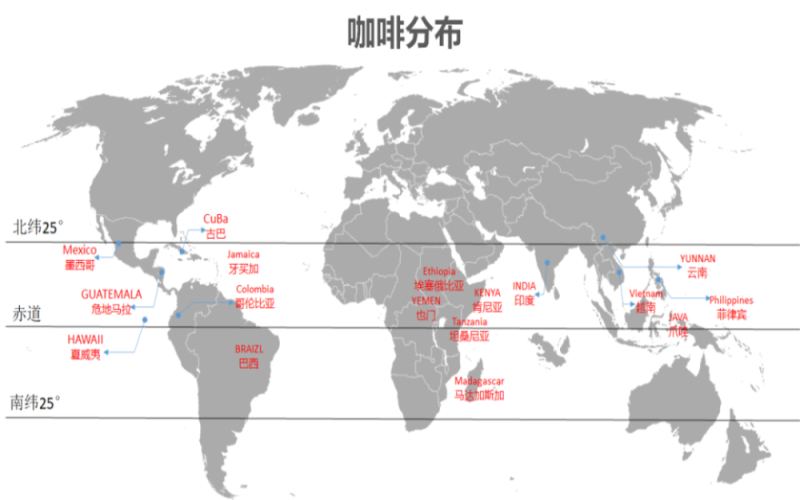
Analysis of Yunnan Coffee Bean Varieties: Flavor Characteristics and Cultivation History of Arabica Small-Bean Species
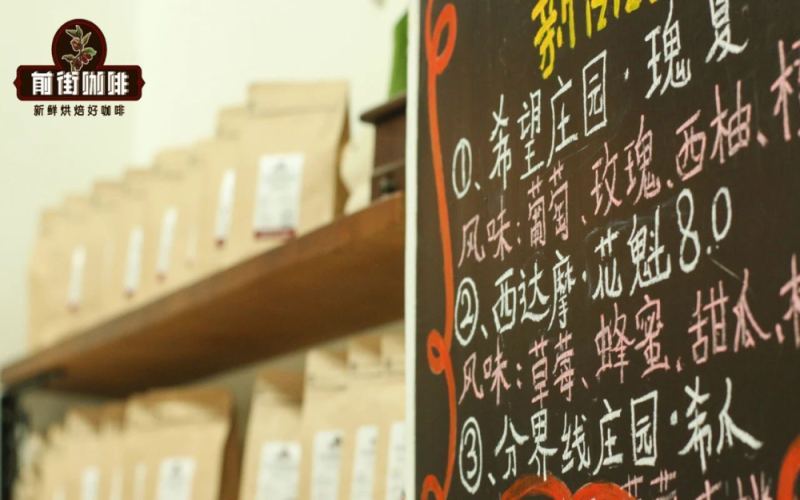
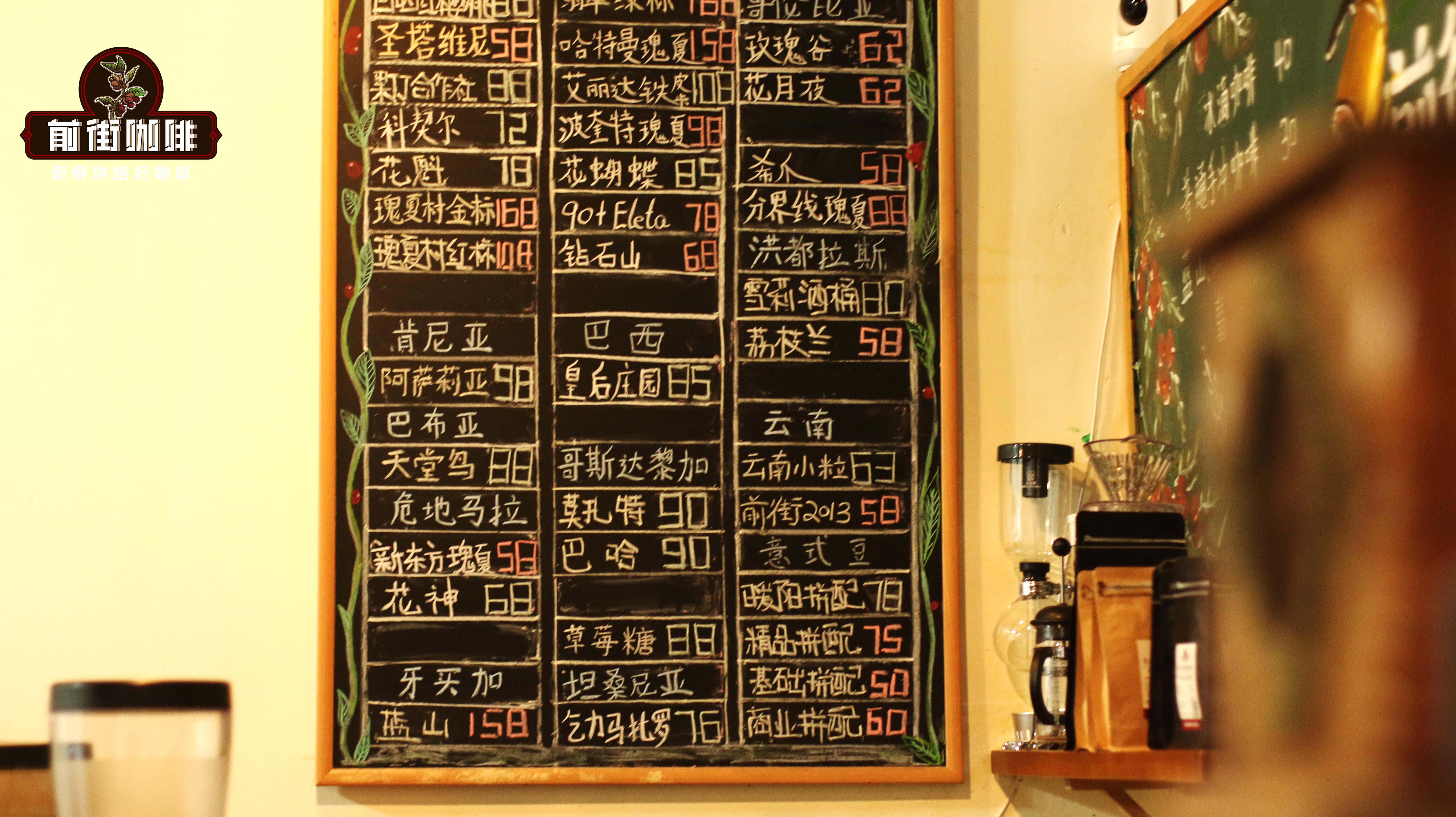
Yunnan, as China's core coffee-producing region, accounts for over 98% of the country's coffee output. What many people don't know is that the coffee grown in Yunnan belongs to the Arabica species, locally known as "Yunnan small-bean coffee." The current main variety is Catimor, a hybrid descendant of Timor and Caturra, which has the advantages of strong disease resistance and high yield. Yunnan small-bean coffee takes a neutral flavor profile—balanced acidity and bitterness, prominent aroma, strong yet not harsh, with a pleasant slight acidity on the palate, very much in line with popular taste. Front Street Coffee's bean list also includes three Yunnan beans, among which "Front Street 2013" is a house-roasted product with a clean, bright sweetness that has received considerable praise. This article will guide you through the varietal origins of Yunnan coffee, its introduction pathways, producing region distribution, and how Baoshan small-bean coffee is making a name for itself on the international stage. [more…]
Starbucks Expands into Yunnan Coffee Regions: Front Street Explains the Flavors and Brewing Characteristics of Each Origin
In recent years, Yunnan coffee has risen prominently, gradually stepping into the public eye with its unique terroir and continuously improving specialty craftsmanship. From Pu'er to Dehong, Lincang, and Baoshan, each producing region displays a distinctly different flavor profile. Since 2013, Front Street Coffee has been conducting Typica cultivation trials in Lincang, accumulating rich origin experience. This article will guide you through a systematic understanding of the distribution of Yunnan's major coffee-producing regions, variety evolution, and processing method characteristics, along with Front Street's brewing parameters and flavor descriptions, helping you gain a comprehensive understanding of this dark horse of domestic coffee. [more…]
Wuyi Rock Tea vs. Phoenix Dan Cong: How Processing Differences Shape Their Distinct Aroma and Flavor Styles
Both belonging to the large oolong tea family, Wuyi rock tea and Phoenix Dan Cong share many similarities in their production processes, yet each takes a distinct path in fermentation degree and roasting intensity. Rock tea leans toward emphasizing body and seeking aroma, while Dan Cong excels at emphasizing aroma and seeking body. The former undergoes more thorough and complete leaf shaking, while the latter is relatively lightly processed, resulting in a significant divergence in mouthfeel richness and aromatic expression. This article will systematically break down the primary and refining processes of both, and deeply analyze how key techniques such as double pan-firing and double rolling, and slow simmering over low heat, impart rock tea its unique character, while also revealing the logic behind Phoenix Dan Cong's light fermentation and light roasting that highlights floral aromas. Whether you are a rock tea devotee or a Dan Cong enthusiast, you will gain a clear understanding of the craftsmanship. [more…]
Distribution of Yunnan Coffee Producing Areas and Variety Analysis: Flavor Characteristics and Brewing Key Points of Hand-Brewed Yunnan Small-Bean Coffee
Yunnan, as the core producing region of China's domestic coffee, has in recent years continually reshaped the public's perception of homegrown coffee. This article systematically reviews the distribution and characteristics of Yunnan's main coffee-producing regions—Pu'er, Dehong, Lincang, and Baoshan—analyzes the current cultivation status of varieties such as Catimor, Typica, and Bourbon in Yunnan, and highlights Front Street Coffee's Typica cultivation practices and brewing methods in Lincang. At the same time, the article also explores Yunnan coffee's preference for washed processing, harvesting challenges, and the trend toward specialty-grade development, helping coffee enthusiasts gain a comprehensive understanding of the flavor potential and industrial landscape of Yunnan arabica coffee. It is suitable for readers who follow domestic coffee and want to read in depth. [more…]
Analysis of Varieties in Yunnan’s Four Major Coffee Regions and a Practical Guide to the Coffee-to-Water Ratio for Hand-Brewed Small-Bean Coffee
In recent years, the popularity of Yunnan coffee has continued to rise within China's specialty coffee circles, and more and more enthusiasts have begun to pay attention to the true face of this domestic coffee origin. This article systematically reviews the cultivation history, variety distribution, and flavor characteristics of Yunnan's four major producing regions—Pu'er, Dehong, Lincang, and Baoshan—and focuses on Front Street Coffee's experience and gains from establishing its own estate in Lincang to grow Typica. At the same time, the article also explains in detail why Yunnan uses Catimor as its main planted variety, why the washed processing method has become mainstream, and the specific water ratios and extraction parameters used by Front Street in its three-stage pour-over of Yunnan small-bean coffee, helping readers comprehensively understand the complete thread of Yunnan coffee from origin to cup. [more…]
Yunnan Coffee Beans: From Cultivation History to Flavor Characteristics—A Complete Analysis of Typica and Catimor Varieties
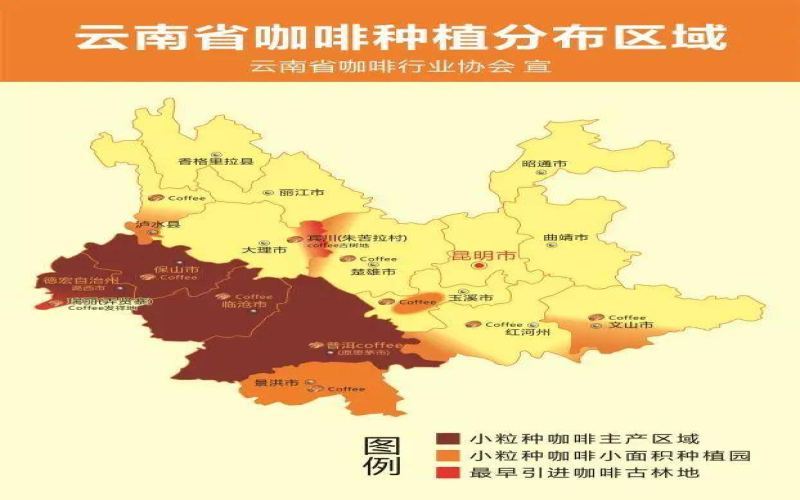
Yunnan, as China's core coffee-producing region, has a cultivation history dating back over a century and now holds an absolutely dominant position in the country's coffee planting area and output. This article systematically traces the evolution of Yunnan coffee from its introduction by missionaries to Nestlé's promotion of large-scale Catimor cultivation, and explains in detail the terroir differences among major producing regions such as Dehong, Baoshan, Lincang, and Pu'er, while comparing the characteristics and processing methods of the two major varieties, Typica and Catimor. Front Street Coffee has established a dedicated Typica estate in Baoshan and launched multiple products including washed Typica and Catimor everyday drinking beans, along with roasting and pour-over parameters, to give you a comprehensive understanding of the potential and flavor expression of Yunnan coffee. [more…]
The Origins and Varietal Analysis of Yunnan Arabica Coffee: A Century of Evolution from Typica to Catimor
Yunnan, as the core production region for coffee cultivation in China, has seen its small-bean coffee development span more than a century. From its introduction to the mainland in 1892 to now accounting for seventy percent of the national planting area and over eighty percent of production, Yunnan coffee has undergone multiple transformations in variety replacement, processing method evolution, and market positioning. This article systematically reviews the historical trajectory, main production area distribution, variety characteristics, and processing methods of Yunnan small-bean coffee. At the same time, combining Front Street Coffee's cultivation practices in Baoshan and Lincang, it analyzes the effects of washed and natural processing on flavor, and provides reference parameter suggestions for daily brewing, helping coffee enthusiasts gain a more comprehensive understanding of the current status and potential of Yunnan coffee. [more…]
A Comprehensive Analysis of Yunnan Arabica Coffee: Origin Distribution, Variety Evolution, and Front Street Coffee's Planting Practices
Yunnan, as China's most important coffee-producing region, has a cultivation history that can be traced back to 1904, when French missionaries planted the first batch of Typica in Zhukula Village. After more than a century of development, Yunnan coffee has moved from obscurity toward the path of specialty coffee, with producing areas such as Baoshan, Pu'er, Dehong, and Lincang each having their own characteristics. However, factors such as variety replacement, choice of processing method, and growing altitude have always influenced the flavor direction of Yunnan coffee. Front Street Coffee has gone deep into Yunnan to establish estates, adhering to the Typica variety and the traditional washed and natural processing methods, in an attempt to restore the most authentic taste of Yunnan coffee. This article will systematically sort out the origin distribution and variety evolution history of Yunnan coffee, and share Front Street's practical experience in cultivation and processing. [more…]
A Century of Yunnan Arabica Cultivation and Typica Flavor Analysis: Front Street 2013 vs. Yunnan Arabica Comparison
The core production region for coffee cultivation in China is Yunnan, and the story of Yunnan coffee begins over a hundred years ago. From the first coffee tree planted by a French missionary in Zhukula, to the large-scale replacement of Typica by Catimor, and then to Front Street Coffee establishing its own estate in Lincang to select and breed Typica and launch "Front Street 2013," Yunnan coffee has undergone variety turnover and industrial upgrading. This article will trace the historical development of Yunnan coffee and the characteristics of its main production regions, explain in detail the differences among the three major varieties—Typica, Bourbon, and Catimor—and introduce the effects of two processing methods, washed and natural, on flavor. It also includes the V60 brewing parameters and flavor descriptions for Front Street 2013 and Yunnan Arabica coffee, helping coffee enthusiasts gain a comprehensive understanding of the current state and charm of Yunnan coffee. [more…]
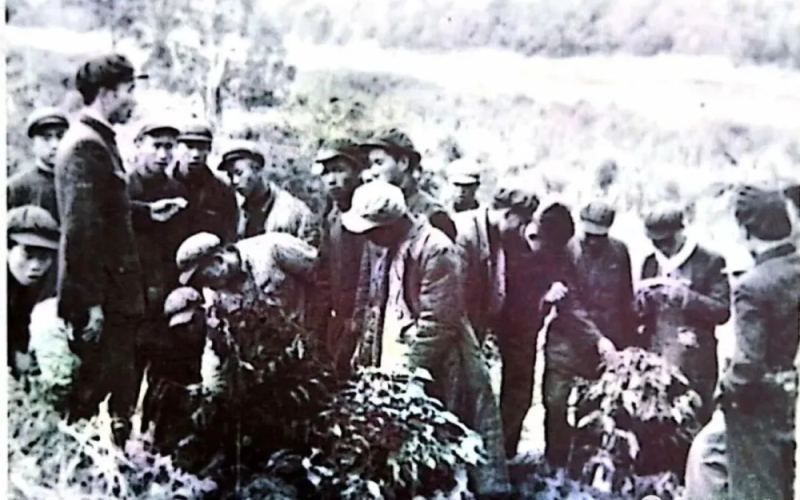
Yunnan Catimor Coffee Flavor Analysis: A Comprehensive Overview of Regional Distribution, Variety Characteristics, and Processing Methods
Yunnan coffee has been actively venturing into the specialty coffee sector in recent years. Although it started relatively late, it demonstrates considerable development potential thanks to its exceptional natural conditions. Front Street Coffee operates a coffee estate in Baoshan, Yunnan, dedicated to cultivating the Typica variety. This article will systematically review the cultivation history of Yunnan coffee, the distribution of major producing regions, variety characteristics, and differences in processing methods. It will focus on analyzing the flavor profiles of the two major varieties, Catimor and Typica, and introduce several Yunnan coffee beans produced by the Front Street Coffee estate. Whether you are encountering the Yunnan producing region for the first time or wish to gain a deeper understanding of Catimor's taste characteristics, this article can provide valuable reference. [more…]
Where is Yunnan small-bean coffee produced? A complete analysis of the characteristics of the four major regions, variety differences, and brewing parameters
Yunnan small-bean coffee actually refers to the Arabica variety, named for its smaller beans, in contrast to the medium-bean Robusta grown in Hainan. The story of Yunnan coffee begins in 1904, when the missionary Tian Deneng planted the first coffee seedling in Zhugula Village, Binchuan, and it has now spanned more than a century. Today, Baoshan, Pu'er, Dehong, and Lincang are the four main producing regions, each with different climate conditions and planting scales. As for varieties, the vast majority of what is grown in Yunnan is Catimor, while Front Street Coffee insists on selling traditionally processed beans, both washed and natural, and also grows Typica itself in Lincang, launching "Front Street 2013." This article will provide a complete overview of Yunnan small-bean coffee, from producing regions and varieties to flavor and brewing methods. [more…]
Yunnan Coffee Brand Recommendation Guide: A Complete Analysis of Small-Bean Coffee Origins, Flavors, Varieties, and Processing Methods
Yunnan, this fertile land crossed by the Tropic of Cancer, is gradually securing a place on the international specialty coffee map, represented by Baoshan small-bean coffee. From 1904, when missionary Tian Deneng planted the first Typica tree in Zhukula Village, to today's flourishing development of producing regions such as Pu'er, Baoshan, Dehong, and Lincang, Yunnan coffee has gone through more than a century of ups and downs. This article will take you deep into the terroir characteristics of Yunnan's main coffee-producing areas, the origins and differences between the two major varieties Typica and Catimor, and how washed and natural processing methods shape the flavors in the cup. At the same time, we will also share Front Street Coffee's cultivation practices and brewing suggestions in Yunnan, providing coffee lovers with a practical guide to understanding Yunnan coffee. [more…]
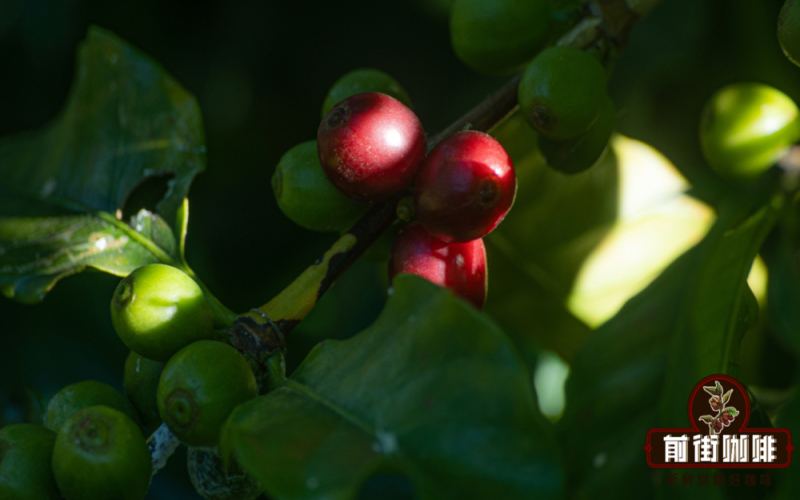
A Comprehensive Analysis of Coffee Cultivation and Varieties in Yunnan: Flavor Comparison of Catimor and Typica and Front Street's Practices in the Producing Region
Yunnan, as China's core coffee-producing region, has performed impressively in the specialty coffee market in recent years. This article focuses on the planting varieties, growing region conditions, and processing methods of Yunnan coffee, with emphasis on introducing the characteristic differences between the two major varieties, Catimor and Typica. It reviews the terroir overview of major producing regions such as Dehong, Baoshan, Lincang, and Pu'er, and shares Front Street Coffee's production philosophy of cultivating Typica in Baoshan and adhering to washed and natural processing. The article also includes specific information on three products—Front Street 2013 Typica, Yunnan Small-Bean Catimor, and Yunnan Natural Catimor—as well as roasting and pour-over parameter suggestions, making it suitable for enthusiasts who wish to gain a deeper understanding of Yunnan coffee. [more…]
Yunnan Coffee Bean Origin Distribution and Flavor Characteristics: A Review of Small-Bean Coffee Brands in Lincang, Baoshan, Pu'er, and Dehong
Yunnan is China's most important coffee-producing region, with a cultivation history that can be traced back to 1904, when a French missionary planted the first coffee tree in Zhukula Village. After more than a century of development, Yunnan coffee has formed four core production areas: Lincang, Baoshan, Pu'er, and Dehong. Thanks to the tropical mountain terroir of high altitude and large temperature differences, it produces high-quality Arabica coffee. This article will systematically review the geographical conditions and cultivation characteristics of each production area, analyze the differences between Typica and Catimor varieties, and introduce in detail the key points of washed processing and brewing. Front Street Coffee has its own estate in Lincang, and its 2013 Typica and Baoshan Washed Daily Drinking Beans are excellent choices for experiencing the flavors of Yunnan coffee. [more…]